Gift cards remain one of retail’s most resilient revenue drivers, but they have become a growing target for fraudsters. The US Federal Trade Commission estimates that a quarter of reported scams involve tampered or counterfeit cards. The operational fallout for merchants is significant, costing several a significant percentage of income from gift cards. A new range of prepaid tag solutions from Infineon Technologies (in partnership with Karta Gift Card) aims to address the problem by combining NFC technology with cryptographic protection.
How the technology works
The technology replaces printed barcodes and magnetic stripes with a chip that holds encrypted credentials. Customers activate or redeem cards simply by tapping either an NFC-enabled phone or a physical gift card at the point of sale. Data is stored on a protected chip rather than being visible on packaging, so blocking common theft and cloning methods.
Infineon has released two versions of its secured prepaid tag: one for open-loop cards processed through global payment networks such as Visa and Mastercard, the other for closed-loop cards confined to a retailer’s own systems.
The solution integrates industry-standard AES encryption and dynamic validation for every transaction. Each tap triggers cryptographic checks that confirm the card’s legitimacy. For retailers, that means lower chargeback exposure and greater trust from consumers. The infrastructure can fit into existing smart card or ticket production systems, reducing the need for manufacturing changes for card producers.
Business upside for retailers
Fraud prevention is the most obvious win, but there are peripheral benefits for customer confidence and retailers’ operational efficiency. A secure tap-to-redeem process eliminates the manual verification steps staff currently perform when customers question a balance or dispute a transaction. Cards using the platform might also be pressed into service as digital loyalty identifiers, integrating with CRM systems for post-purchase engagement or reactivation campaigns. Retailers can link gift cards to app their branded apps, using the same NFC technology to encourage repeat visits and gather rich customer data.
Competitive context
Infineon’s platform is similar in aim with those of other semiconductor and payment security firms looking to strengthen trust in the digital and physical prepaid ecosystem. NXP’s MIFARE DESFire and STMicroelectronics’ STPay-based gift card technologies also support secure tap interactions and tokenisation models. Retailers weighing their options should assess which solution aligns best with existing POS and loyalty schemes, the potential overheads of integration into the existing tech stack, and the costs associated with card personalisation.
While the available platforms differ in technical detail, their direction is the same – to create a more secure, contactless retail system that can build loyalty and protect revenue. For multi‑brand operators, adopting one or more of these systems could deliver measurable returns through lower fraud costs.
Conclusions
Gift cards are seen as an evolution from static payment products to dynamic engagement tools. Yet security remains central to customer and retailer trust. Solutions from Infineon and others suggest a future where tapping replaces scratch-to-reveal and digital encryption removes the element of security risk by the use of visible codes on cards. For retailers, this kind of upgrade is a defence against fraud and can be part of more personalised, data-driven marketing strategy.
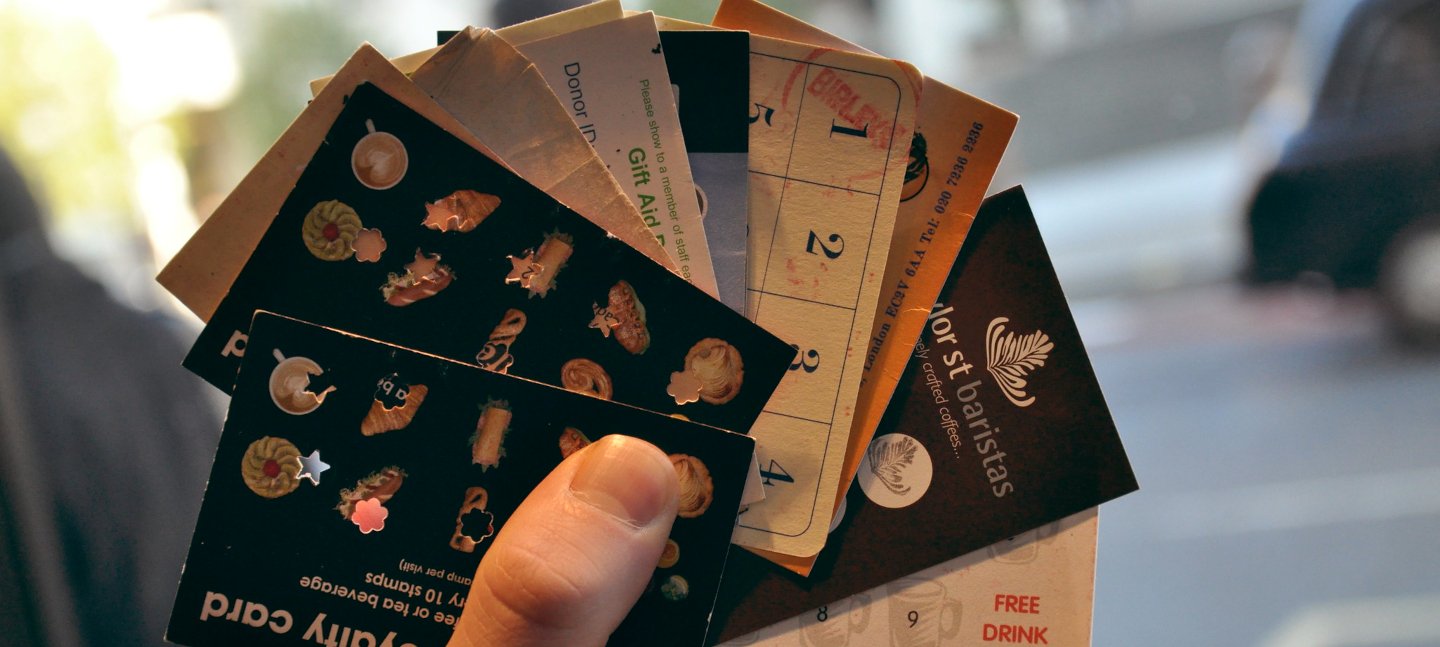
(Image source: “So many coffee loyalty cards” by Nick J Webb is licensed under CC BY 2.0.)

Find out more about the Digital Marketing World Forum series and register here.